How to Spot a Bad Web Designer Before Hiring
Most business owners don't find out they hired the wrong web designer until the site is already live and quietly doing nothing for them. By then you've paid, you've waited, and you're staring at a website that looks fine but never brings in a lead. The good news is that the warning signs are almost always there before you sign — you just have to know where to look.
I build websites for small businesses, and the single biggest thing I want owners to understand is that a good designer and a bad one are easy to tell apart once you stop looking at price alone. Here's exactly how I'd vet a web designer if I were in your shoes.
Start With Their Own Website
This is the fastest test there is, and almost nobody uses it. Look at the designer's own website. If it looks bad, feels dated, or confuses you even for a second, walk away. A web designer's site is the one piece of work they have total control over. If they can't make their own site clear and easy to use, they are not going to do it for you.
You don't need a trained eye for this. Just be honest about your own reaction. Did you immediately understand what they do and who they help? Could you find their work and their contact info without hunting? If you felt even a little lost, that's your answer. Confusion is the enemy of a good website, and if their own site confuses you, imagine what your customers will feel on the one they build you.
Be Suspicious of a Price That's Too Cheap
Super cheap pricing is one of the biggest red flags there is. Ask yourself the obvious question: what designer of any real value would charge next to nothing for their work? Good design takes time, strategy, and skill, and people who are good at it know what it's worth. A price that seems too good to be true almost always is.
There's a second problem with the bargain-basement option that owners rarely think about. A designer charging almost nothing usually isn't running a healthy business, which means they may not be around in a year. When they disappear, you're stuck — either scrambling to maintain a site you don't understand, or paying someone else to start over. So the "cheap" designer often costs you twice, because you end up switching designers anyway.
I'm not saying the most expensive option is automatically the right one. I'm saying price is a signal. If someone is willing to build your entire online presence for the cost of a nice dinner, that tells you how much thought is going into it. For a realistic picture of what good work actually costs, I break the numbers down in what you should expect to pay for a website design
A Good Designer Wants to Understand Your Business
Here's the difference that matters most. A cheap or lazy designer just wants to get the job done and move on. A good one wants to understand your business first — what you do, who your customers are, how you take care of them, and what makes you different.
That last part is everything. We ask every client about their USP, their unique selling proposition. It's a simple question with a huge payoff: what do you do that your competitors don't? If a designer never asks you that, they can't accurately represent what you do or why someone should choose you. They'll build you something generic, and generic doesn't convince anyone to pick up the phone.
A designer who doesn't understand your business is building blind. They can make something that looks nice, but looking nice was never the point. The point is a site that portrays your work accurately and moves the right people to act. When a designer skips the part where they learn your business, the site that comes out the other end is bound to fall flat.
The One Test: Send Your Link and Ask What They'd Do Differently
If you only have time to do one thing before hiring, do this. Send the designer a link to your current website and ask them what they'd do differently. Their answer tells you almost everything you need to know.
A good designer will give you specifics — not vague promises like "make it pop" or "modernize it," but concrete changes and, more importantly, what each change is supposed to achieve. If they say they'd rebuild your homepage, the follow-up question is why. Is it just to make it look newer, or is it to turn it into a sales funnel that captures more leads? The answer separates the pros from everyone else.
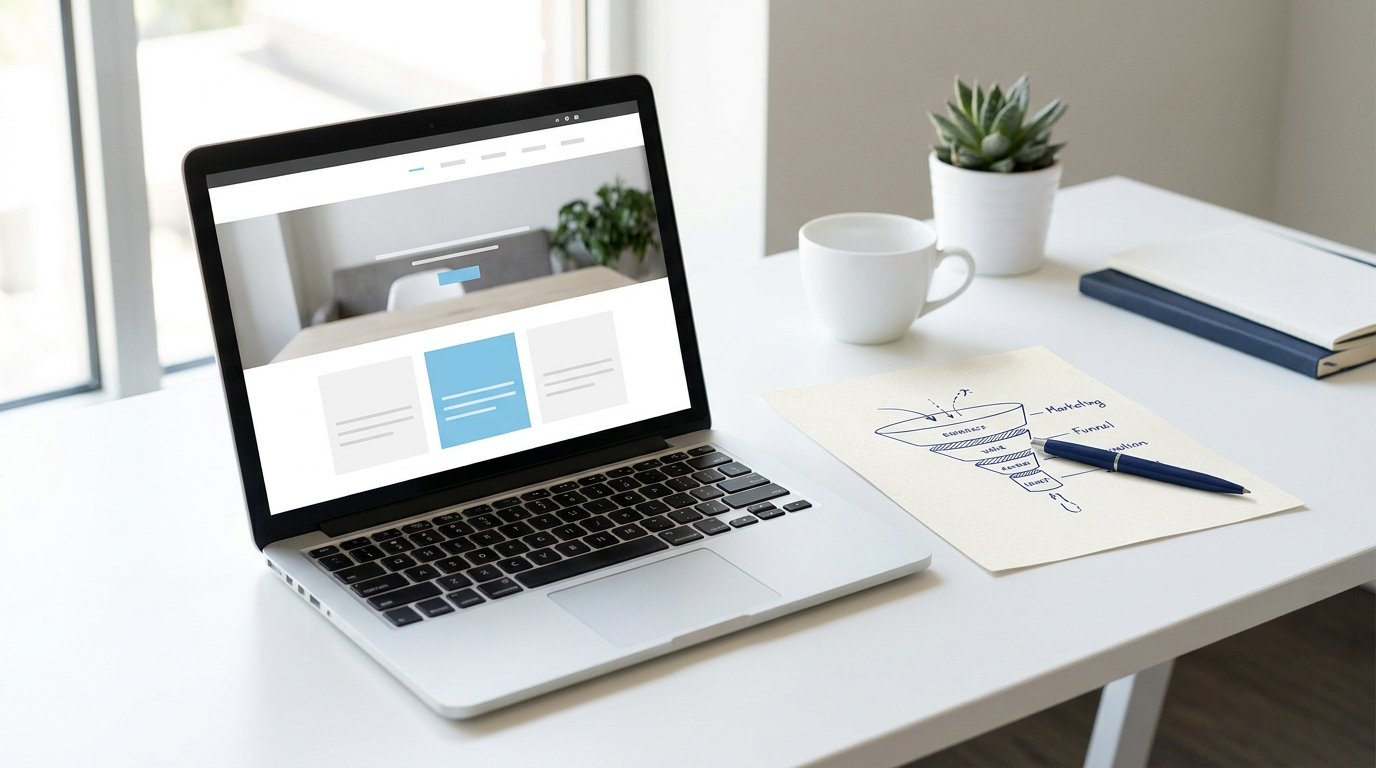
Let me put real weight behind that with some example math. Say 100 people land on your site and your conversion rate is 1 percent. That's one lead out of every hundred visitors. Now say a designer rebuilds it around a proper funnel and your conversion rate goes from 1 percent to 5 percent. These aren't hard numbers — they're just to make the point — but that jump means four extra leads out of the same hundred visitors, without spending a dime more on traffic. That is an enormous return on investment. A designer who can't talk about your site in these terms is missing the whole point of the job.
Design That Doesn't Convert Is Missing the Point
Pull all of this together and you get one simple filter. A bad web designer focuses on getting a nice-looking site out the door. A good one focuses on getting you customers. Web design that isn't built to convert, made by someone who never bothered to understand your business, is set up to fail from the start.
So when you're evaluating anyone, keep coming back to the same question: is this person thinking about how my website looks, or how my website performs? The ones worth hiring are always thinking about performance, because that's the thing you're actually paying for. If you want more background on the trade-offs, our can I afford a professional web designer post walks through why the cheap route usually costs more in the long run.
Frequently Asked Questions
How do I choose a web designer for my small business?
Start by looking at the designer's own website, then judge them on whether they ask about your business before they talk about price. The right designer wants to understand your customers and your unique selling proposition, and can explain what they'd change on your current site and what those changes should achieve. You can see how we approach that on our small business web design page.
Is a cheap web designer ever worth it?
Occasionally, if you truly only need a basic placeholder and aren't trying to generate leads. But for most businesses, a rock-bottom price signals rushed work and a designer who may not be around long enough to support the site. For where affordable and cheap actually diverge, read where can I find an affordable web designer.
What should a web designer ask me before starting?
A good designer asks what you do, who your customers are, how you serve them, and what makes you different from your competitors. If those questions never come up, the site they build can't accurately represent your business — and a site that doesn't represent you clearly won't convince anyone to choose you.
How much should I expect to pay for a good web designer?
For a full small business build, expect roughly $2,500 to $5,000 and up, depending on pages and what's included. Anything far below that is worth questioning. I explain what drives the number in how much it costs to hire a web designer.
Before You Hire Anyone, Get an Honest Second Opinion
If you take one thing from this: a good web designer makes their own site clear, prices their work like it has value, learns your business before they build, and can tell you exactly how they'd turn more of your visitors into customers. A bad one skips all of that and hands you something that just looks okay.
Not sure where your current site stands? Request your free website audit from Northtrail Web Design. I'll take an honest look at what's working, what's quietly costing you leads, and what it would actually take to fix it — no pressure, just a straight answer.