How Much Does It Cost to Hire a Web Designer?
If you've been Googling this question, you've probably already noticed that the answers are all over the place. Some sources say a few hundred dollars. Others say tens of thousands. And almost none of them tell you what actually matters — which is not just what you'll pay, but what you'll get for it, and whether it will actually work for your business.
At Northtrail Web Design, we work with small business owners every day who are trying to figure out exactly this. Here's an honest breakdown of what web design really costs, what the differences mean, and how to make sure you're spending your money in the right place.
What Most Web Designers Actually Charge
Web designers typically price their work one of three ways: hourly, by project, or on a monthly retainer. At Northtrail, we charge per project — not by the hour — because we believe you should know what you're getting into before you ever write a check.
For a small business website build, most of our projects come in around $5,000. That's not a number we picked out of thin air. It reflects the time, strategy, and expertise that goes into building a site that does more than just look good.
If you're seeing quotes far below that — $500, $1,000, even $2,000 — it's worth asking some hard questions about what's actually included.
What You're Really Paying For (and What You're Not)
Web designers typically price their work one of three ways: hourly, by project, or on a monthly retainer. At Northtrail, we charge per project — not by the hour — because we believe you should know what you're getting into before you ever write a check.
For a small business website build, most of our projects come in around $5,000. That's not a number we picked out of thin air. It reflects the time, strategy, and expertise that goes into building a site that does more than just look good.
If you're seeing quotes far below that — $500, $1,000, even $2,000 — it's worth asking some hard questions about what's actually included.
What You're Really Paying For (and What You're Not)
The Cheap Option: What's Missing
There's no shortage of freelancers and platforms willing to put together a basic website for next to nothing. And for some businesses at the very earliest stages, that might be fine temporarily. But here's what those budget builds almost always leave out.
A cheap website is typically built to check a box. It exists. It has your logo, your phone number, maybe a few photos. But it isn't built to do anything — it's not built to convert visitors into leads, rank on Google, or guide a potential customer through your services toward a decision.
When someone lands on your website, you have a very short window to earn their trust and move them toward taking action. A $500 website doesn't account for any of that. The freelancer who built it isn't thinking about your sales funnel. They're thinking about finishing the job.
What a Conversion-Focused Build Actually Does
At Northtrail, every website we build is designed with two things working together: SEO and conversion. You need both, and you need them in balance.
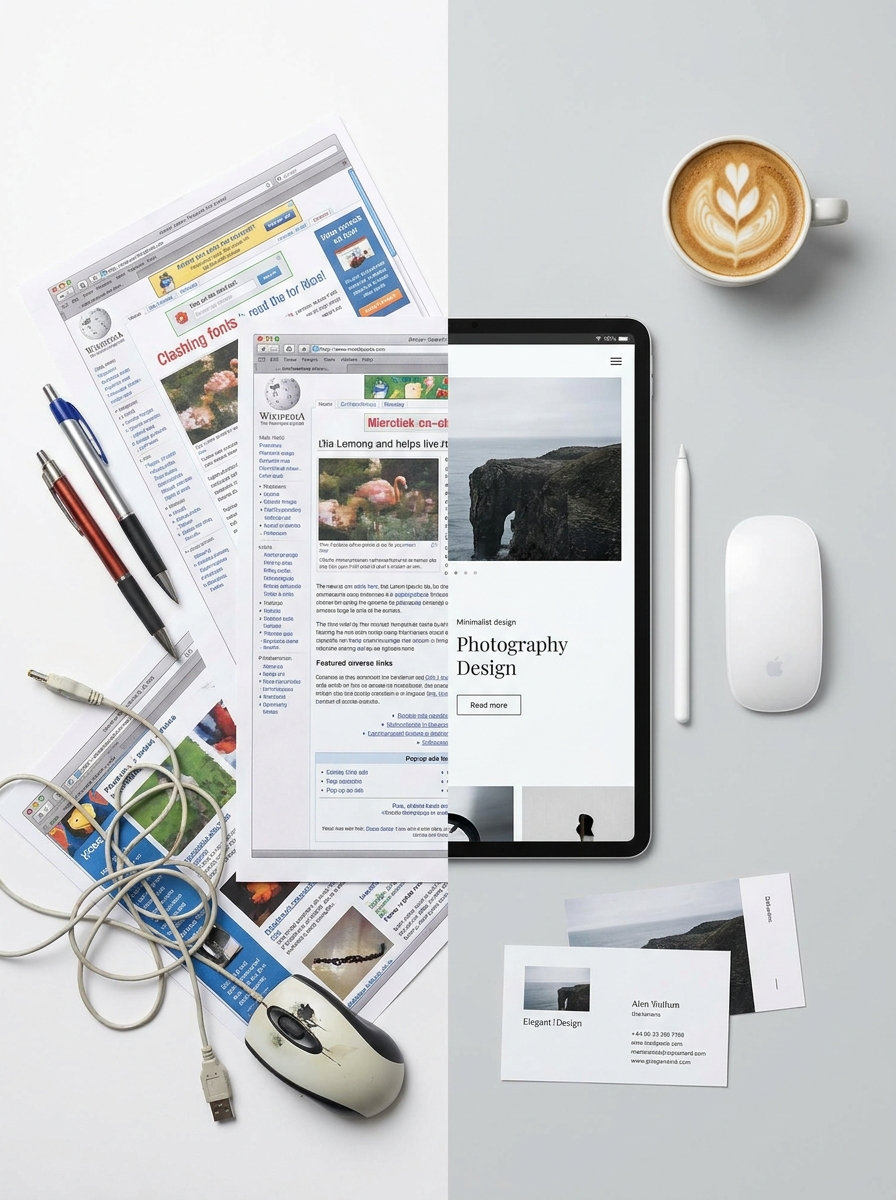
SEO (Search Engine Optimization) gets people to your site. Conversion-focused design turns those visitors into leads. If you have one without the other, you have a problem. A website that ranks on Google but doesn't convert is like having a busy storefront where nobody buys anything. A beautiful site that no one can find is just an expensive online brochure.
We also build with a sales funnel in mind. That means your website is set up to walk potential clients through a journey — from understanding what you offer, to feeling confident in your expertise, to being ready to reach out before they've even spoken to you. The copy, the layout, the calls to action — all of it is designed to guide them toward a decision.
Your website should be selling for you around the clock. That's the standard we build to.
The Most Expensive Mistake Business Owners Make
The biggest mistake I see business owners make when hiring a web designer isn't going too cheap — though that's a close second. It's not knowing what questions to ask.
Most people hire a web designer the same way they might hire a house painter: tell them what you want, agree on a price, and hope it turns out the way you imagined. But a website is a sales tool, not a wall. If you don't know how to communicate what you need — and if the designer doesn't know how to ask the right questions — you end up with something that looks fine and does nothing.
At Northtrail, we have a structured intake process specifically to prevent this. Before we write a word of copy or design a single page, we sit down with clients and ask the questions that get to the heart of what they're actually trying to accomplish. What does success look like? Who is your ideal customer? What do you want someone to do when they land on your homepage? What sets you apart from every competitor in your market?
Setting clear expectations from the beginning means there's no confusion later. What you approve is what you get.
What to Budget for After the Build
Your website isn't a one-time expense. It's an ongoing business asset, and like any asset, it needs maintenance and investment to keep performing.
Here's what ongoing web costs typically look like:
Hosting and maintenance — Keeping your site live, secure, and updated. This is non-negotiable.
SEO services — Ongoing work to help your site rank and attract new traffic over time.
Blog content — Fresh, relevant content that answers the questions your customers are already searching for.
At Northtrail, our monthly SEO package runs $999 per month and includes one blog post per week plus general website maintenance. For the volume and quality of work involved, that's a strong value — especially compared to what most agencies charge for SEO alone.
Why Blog Posts Matter More Than Most People Think
A blog isn't a journal. It's a strategy.
Think of it this way: if you're a plumber in Knoxville, you want to show up when someone searches "how much does it cost to fix a leaking pipe in Knoxville?" or "best plumber near me." A well-written blog post that answers those exact questions — customized to your business, your services, your area — puts you in front of that customer at exactly the right moment.
Every blog post we write is built around what your potential clients are already searching. It answers their questions, positions you as the authority on the topic, and closes with a clear path to contact you or book your services. It's content that earns trust and generates leads while you sleep.
Who Should NOT Hire a Professional Web Designer Right Now
This might be the most honest thing I'll say in this entire post: not every business is ready for a professional web design build, and that's okay.
If you're not actively trying to grow your customer base or improve your online presence, a professionally built website isn't the right investment at this moment. A $5,000 website built on a strategy of growth only makes sense if growth is actually the goal.
If you're in early survival mode, just getting started, or not yet sure what direction your business is going — a simple DIY solution can hold you over. When you're ready to get serious about your online presence and you have a clear vision of where you want your business to go, that's when we should talk.
So, What Should You Expect to Pay?

Here's a straightforward breakdown:
DIY platforms (Wix, Squarespace, etc.): $15–50/month. You build it yourself. Fine for a placeholder, not built to convert or rank.
Budget freelancer: $500–2,000. Expect a basic site with minimal strategy, SEO, or conversion focus.
Professional small business web design (like Northtrail): Around $5,000. Conversion-focused, SEO-optimized, built with a sales funnel in mind.
Larger agencies: $10,000–50,000+. Enterprise-level builds with larger teams and longer timelines.
The Bottom Line
Your website is your online billboard. It's often the first impression a potential client gets of your business, and it's working (or not working) 24 hours a day, 7 days a week. The question isn't whether you can afford a professional website. It's whether you can afford not to have one that actually performs.
If you're ready to build something that brings in leads, ranks on Google, and sells for you while you focus on the work you do best — we'd love to talk.