Questions to Ask a Web Designer Before You Hire One
Think of your website as a billboard. A good billboard looks sharp and reads clearly, and it points people toward doing business with you. But a billboard hidden behind a stand of trees does you no good at all — it doesn't matter how nice it looks if nobody can see it. A lot of websites are exactly that: well-designed, hidden, and quietly doing nothing.
The right questions, asked before you hire, are how you avoid that. Most owners ask about price and turnaround time and stop there. Below are the questions I actually wish more people asked me — the ones that tell you whether a designer is thinking about your business or just about shipping a nice-looking page.
What's Your Game Plan to Get More Leads to My Site?
This is the first question I'd ask, and it's the one that separates a designer from a decorator. A website has three jobs. The design has to look good, the copy has to be easy to understand, and the sales funnel has to turn visitors into leads. But all three of those only matter if people actually reach the site in the first place. That's the part behind the trees.
So ask it directly: what's your plan to increase the number of people landing on my site? A good answer connects design, copy, and traffic into one story. A weak answer treats the website as a finished object — build it, hand it over, done — with no thought about how anyone finds it. If a designer only talks about how the site will look, you've found a decorator, not a partner in your growth. For more on how design and getting found fit together, see our red flags to avoid when hiring a web designer.
How Would You Build a Sales Funnel for My Business?
Notice the phrasing — for my business, not in general. Any designer can describe a funnel in the abstract. The question is whether they'll build one shaped around how you actually get customers. A real answer means they've asked what you sell, who buys it, and what usually convinces someone to reach out, and then they walk your visitor from "I found this site" to "I feel confident" to "I'm ready to contact them."
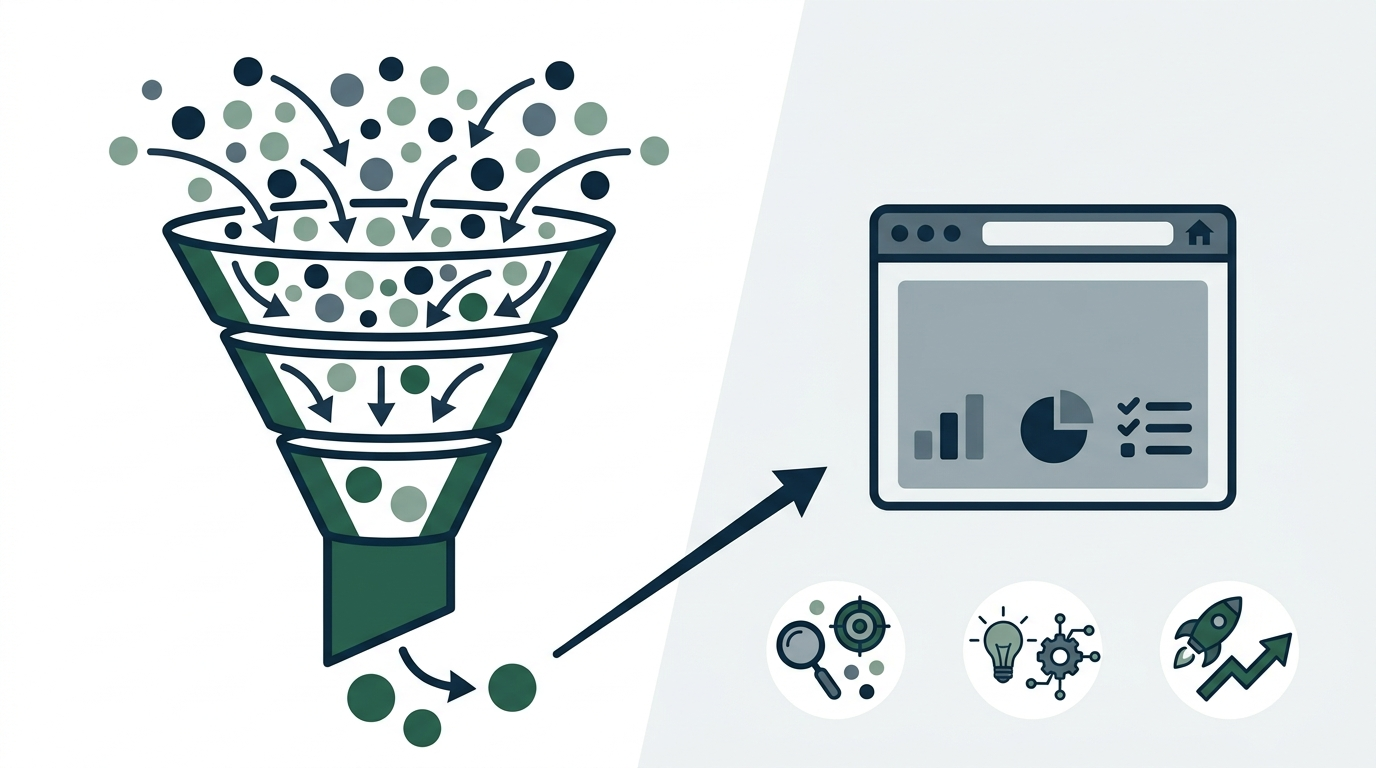
If the answer is vague — "we'll add a contact form" — that's a page, not a funnel. A funnel is the whole path: the copy that builds trust, the layout that guides the eye, and the calls to action placed where a ready buyer would look for them. This is the difference between a site that quietly collects visitors and one that turns them into leads, and it's the same thinking we cover in can I afford a professional web designer.
How Will My Site Actually Get Ranked?
If you're paying for search engine optimization, this is the question that protects your money — and it's the one designers overpromise on the most. So let me tell you what an honest answer sounds like, because it's not the exciting one.
Your site is most likely not going to rank the moment it's built. SEO takes time. You typically won't see real movement for about three months, and it usually takes nine to twelve months to build meaningful traction. Anyone promising page-one rankings in a few weeks is selling you something that doesn't exist. An honest designer will set that expectation up front.

Here's how good ranking work actually happens. We build blog posts and pages around the questions your customers are already typing into Google. Say someone needs a plumber in Baltimore and searches "how much does it cost to hire a plumber." If you're nearby and you have a genuinely helpful post answering exactly that, your post shows up. At the end of it you either offer something free — the way we use a free website audit — or you ask for the sale directly. Either way you've answered a real question, proven you know your field, and earned the right to ask for the business. That's the same reason you're reading this post right now.
One warning sign to listen for: a designer who plans to pump out piles of blog posts for the sake of volume. We don't do that. A post has to answer a real customer question, fit your business, and build value — otherwise it's just noise. There are plenty of AI tools that will crank out generic articles by the dozen, and I'll say this until my dying breath: AI is an incredible tool in the hands of someone who already knows web design and SEO, but it can't replace that expertise. AI is a co-worker, not a replacement. The human judgment is what makes the content actually work.
Who Owns the Site — and Can I Leave?
Ownership is one of the biggest and most overlooked parts of web design, so ask it plainly: if I ever want to leave, what happens to my website? Many designers build in WordPress, host it on their own servers, and layer in their own proprietary tools. That's fine while you love them. The moment you want to leave, you often have to start from scratch or hire a WordPress expert, because WordPress isn't something most owners can pick up and run on their own.
We build on Squarespace on purpose. You own the site. You can edit it yourself if you want, or let us handle maintenance and SEO for you — your choice. Squarespace takes care of hosting and security for a low monthly fee, and you can take your site with you whenever you like. You're never locked in. If a designer's answer to "can I leave?" is complicated or evasive, treat that as its own answer. We break down more of this trade-off in how much it costs to hire a web designer.
Can I See Your Own Website and Some of Your Work?
The simplest question of all, and the one I'd tell every client to lean on: look hard at the web designer's own website. You don't have to love their style — fonts and colors change per industry and per client. But does the site make sense? Is it easy to use? Is the layout clean? If you genuinely dislike the design, the wording, and the overall feel of a designer's own site, that tells you a lot.
A designer's own website is the one project they fully control. If they can't make their own site clear and usable, there's no reason to believe they'll do it on yours.
Frequently Asked Questions
What is the most important question to ask a web designer?
"What's your plan to get more leads to my site?" It forces the designer to talk about design, copy, funnels, and traffic together, instead of treating the website as a finished object nobody has to find. A designer who only talks about looks is a decorator. One who talks about results is a partner. Our red flags post covers more warning signs to listen for.
How long should SEO take to work?
Expect about three months before you see real movement and nine to twelve months to build meaningful traction. Anyone promising fast page-one rankings is overpromising. Lasting results come from consistently answering the questions your customers are actually searching for.
Should my website be built on WordPress or Squarespace?
WordPress is powerful but hard for most owners to maintain, and some designers use it to lock you in through their own hosting and tools. Squarespace keeps you in control — you own the site, can edit it yourself or hand it to us, and can leave whenever you want, with hosting and security handled for a low monthly fee.
How do I know if a web designer is any good?
Start with their own website. If it's confusing, dated, or hard to use, that's a red flag — it's the one site they fully control. For a deeper checklist, read where can i find an affordable web designer.
Ask These Before You Sign Anything
Hiring a web designer isn't about finding the cheapest quote or the flashiest portfolio. It's about finding someone who thinks about getting you leads, builds a funnel around your actual business, is honest about how ranking really works, keeps you in control of your own site, and can point to their own work as proof. Ask the five questions above and the right designer will stand out fast.
Want a straight answer on where your current site stands before you decide anything? Request your free website audit from Northtrail Web Design. We'll show you what's working, what's quietly costing you leads, and what it would take to fix it — no pressure, just an honest look.